
at Audible Garden, Korean Culture Centre UK, London, UK, JUL 21 - 13 OCT, 2023
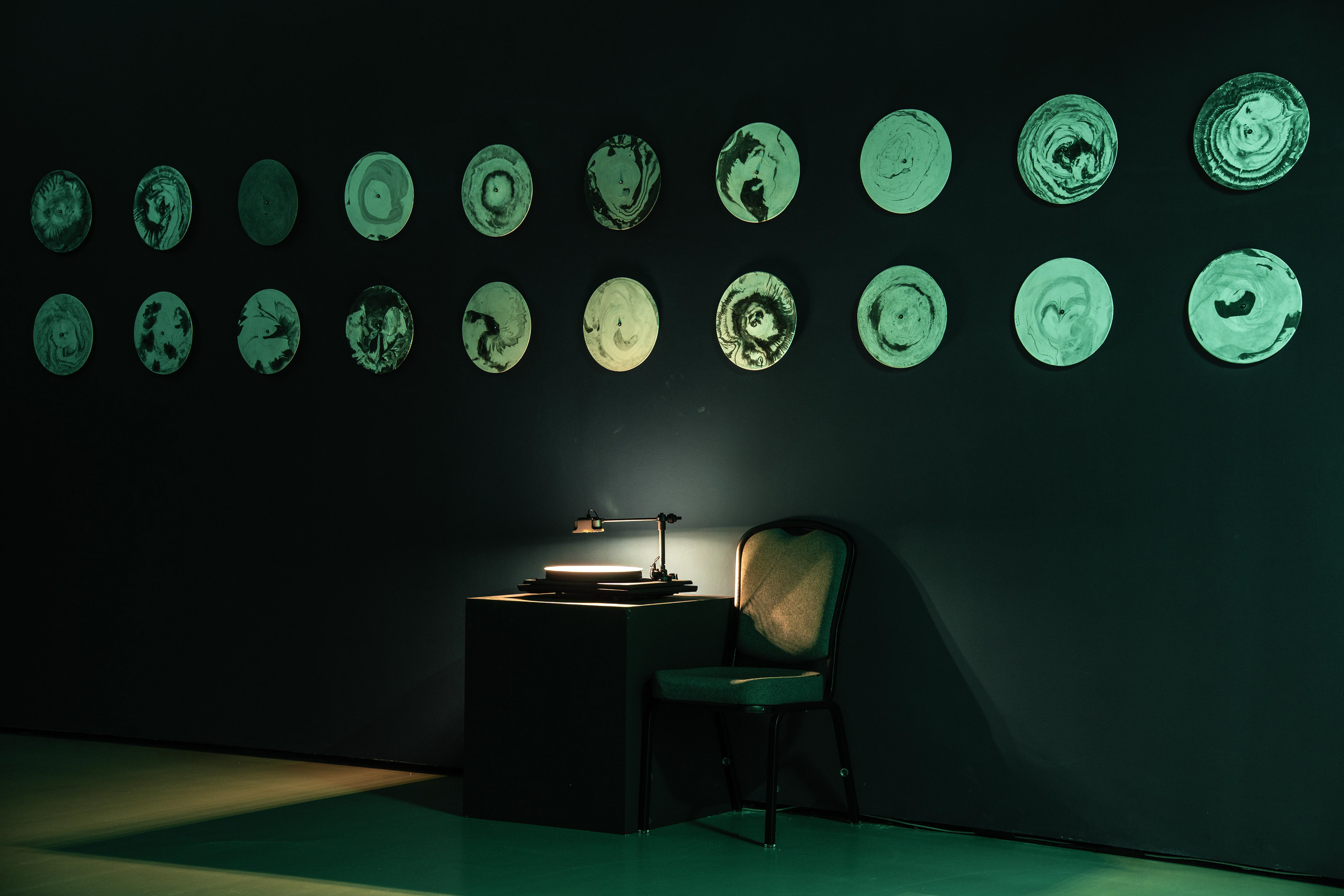
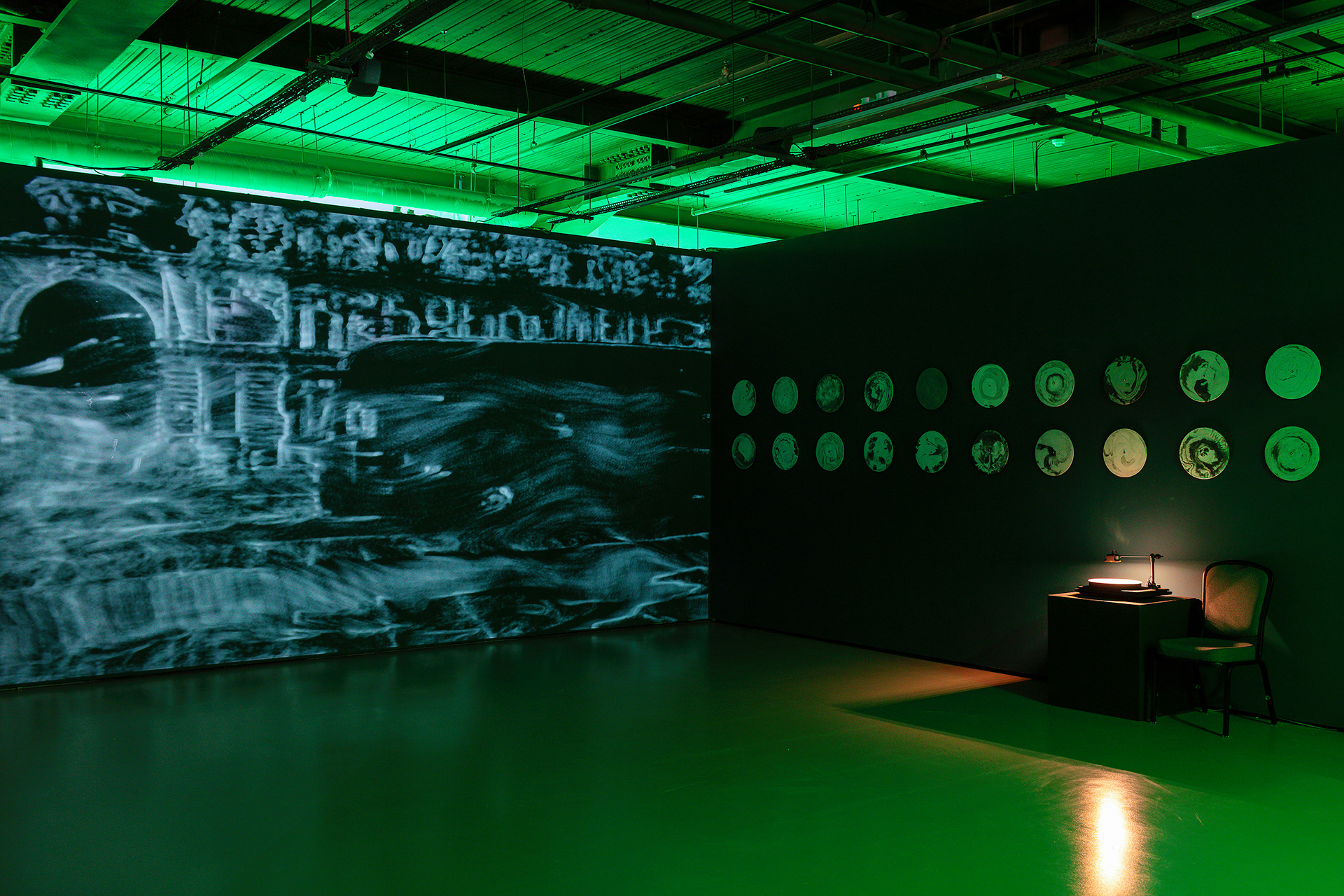
Julian Jinjoon Lee, Daejeon, Summer of 2023, 2023. Installation view of KCCUK.
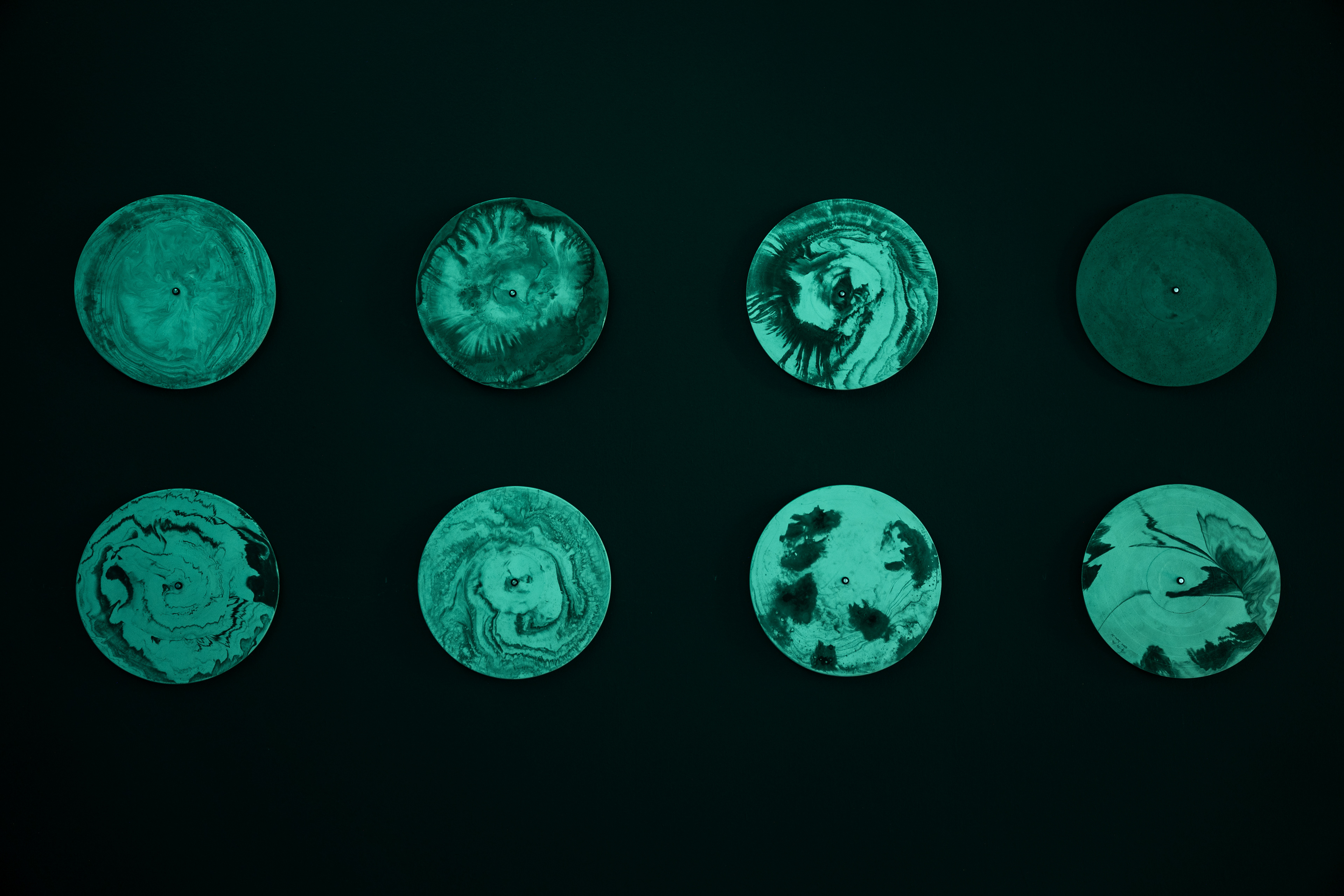
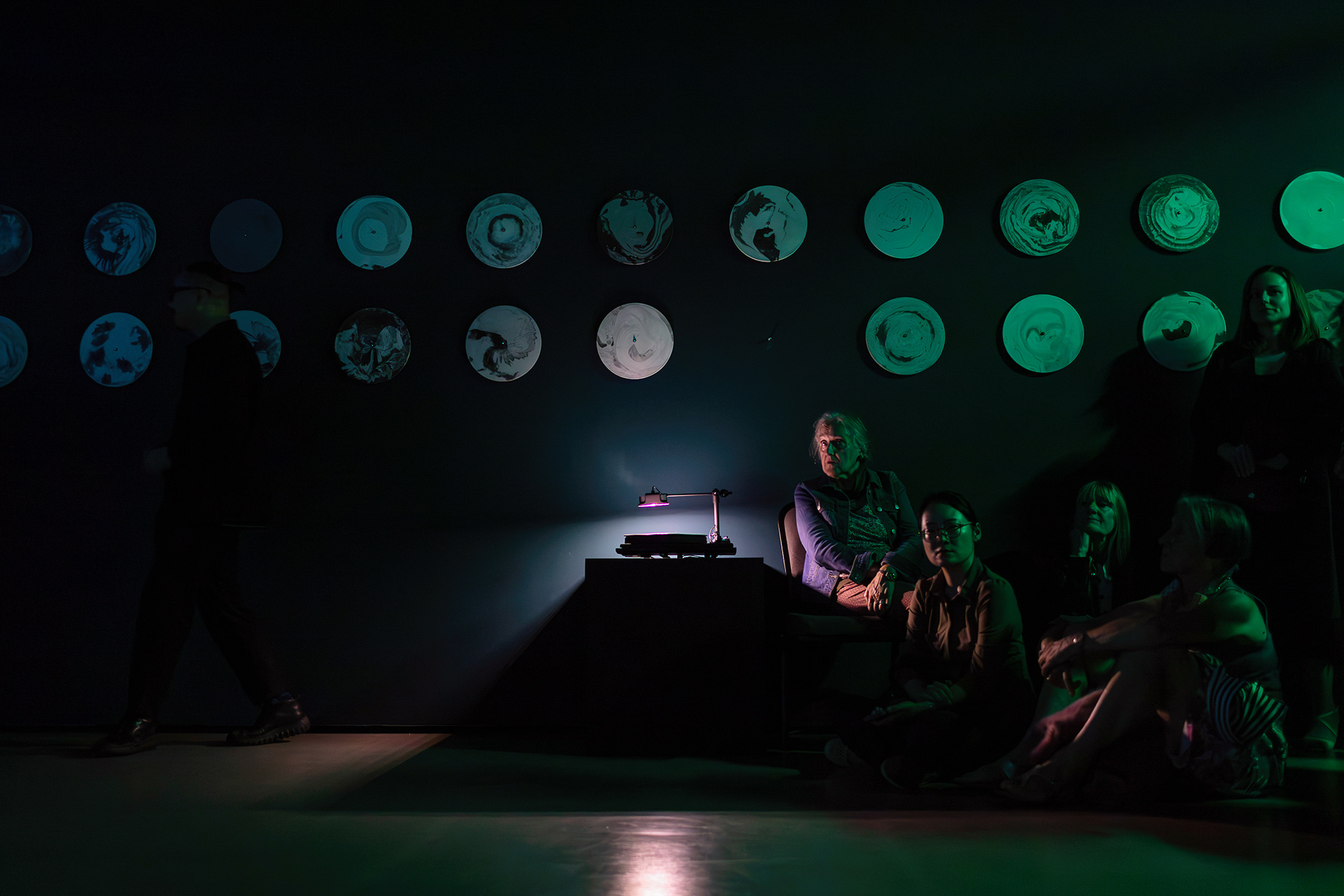
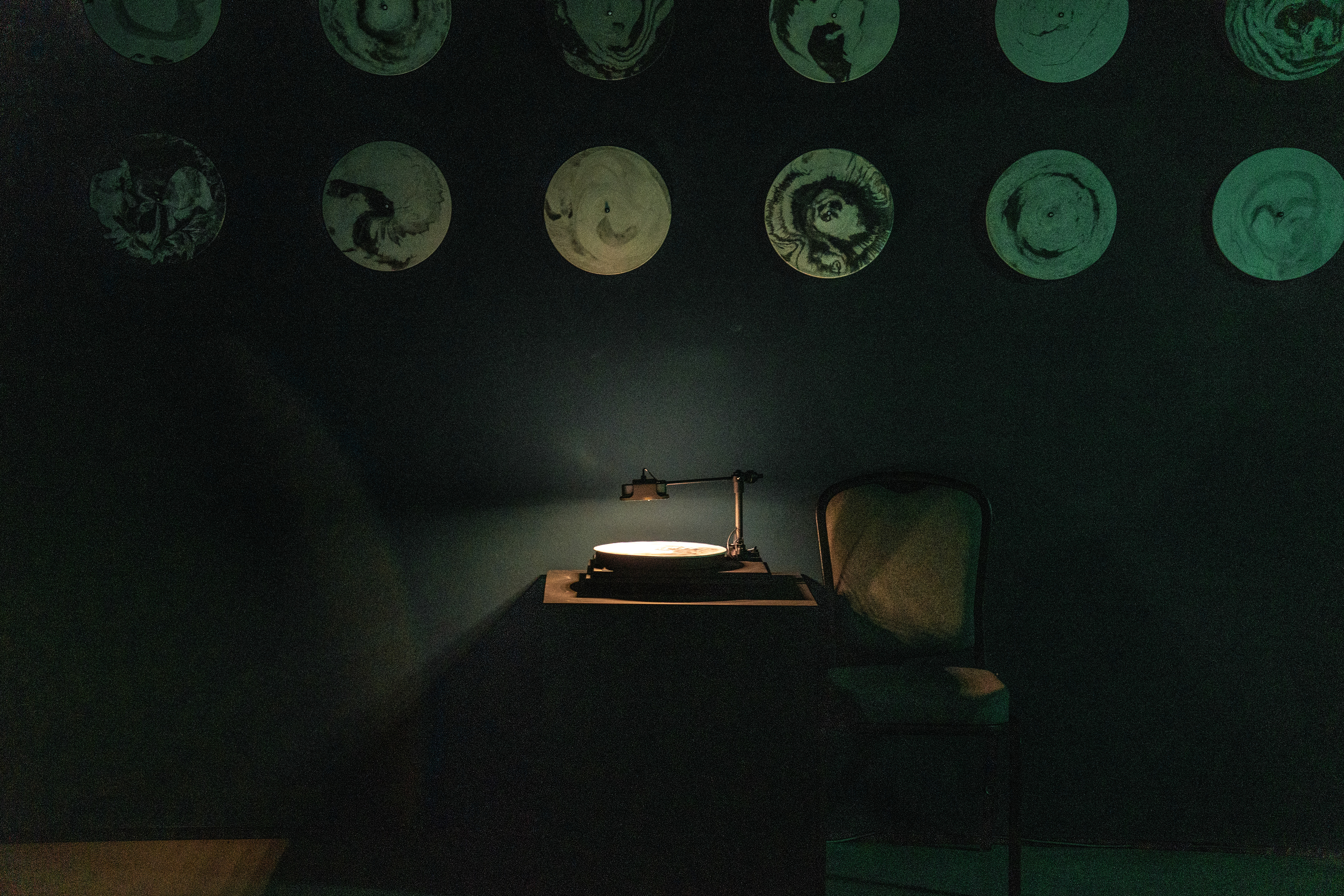
Daejeon, Summer of 2023 is an installation that approaches time, memory, and space as phenomena to be handled—materially, sensorially, and in the present tense. The work takes as its ground a summer spent in Daejeon, South Korea, in 2023, and renders that time not as narrative but as residue: 31 plaster discs, each engraved with the day of its making. The days do not add up to a story. One day passes into the next, and what remains is the fact of passage—dated, physical, and irreversible. The discs do not explain memory; they hold the conditions under which memory might return.
Recording here is not a matter of collecting information. It is the deliberate leaving-behind of a surface so that sensation can reopen after disappearance. Each disc carries no completed meaning, and none completes another. They exist side by side as separate days—similar, yet not interchangeable—each insisting on its own time.
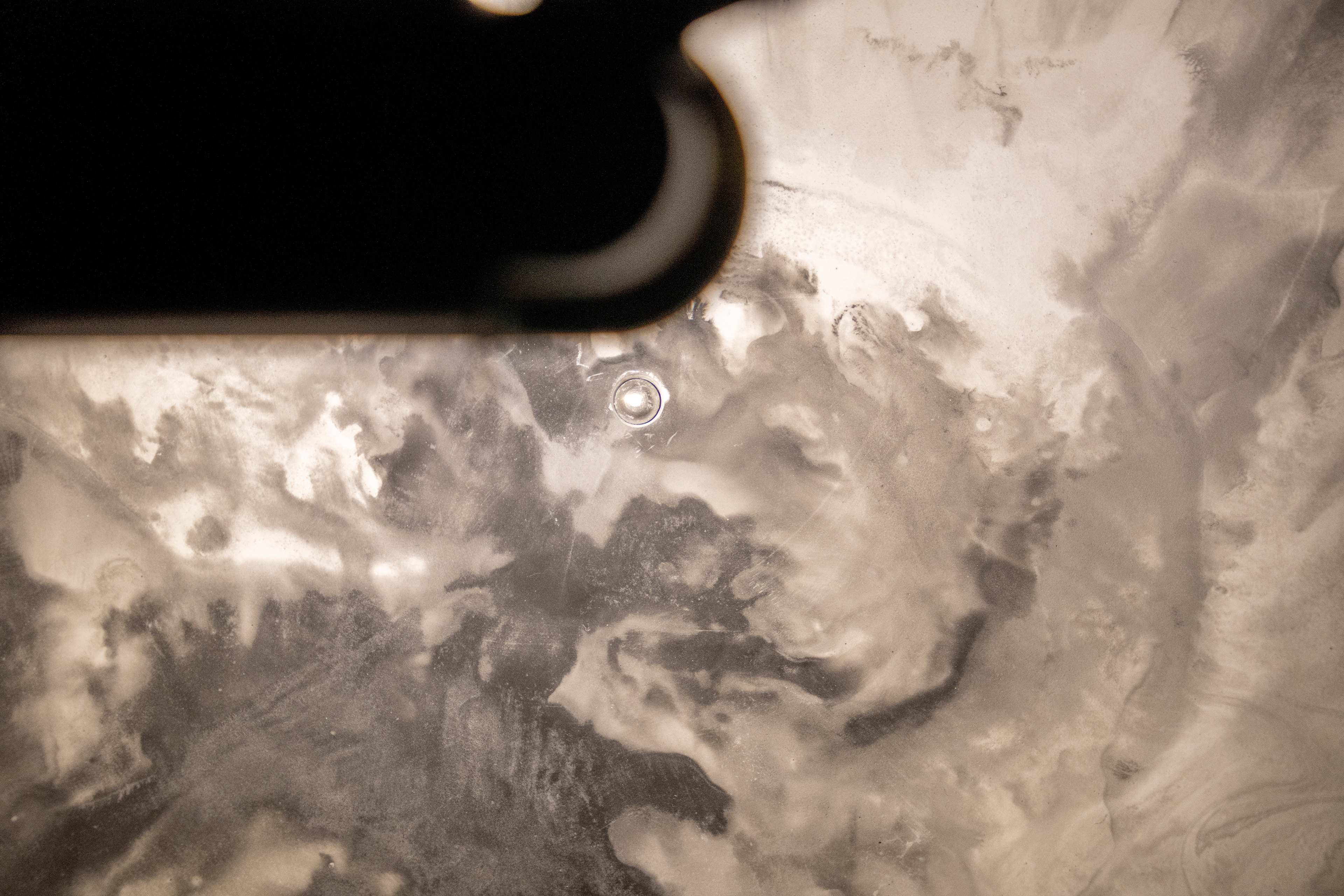
Ink appears on the surface of every disc, but no brush is involved. The ink is dispersed and fixed by breath—blown from the artist’s mouth across plaster. The mark is not depiction. It is a one-time event shaped by respiration, airflow, the body’s state, and the day’s surrounding conditions. What remains on the disc is less an expressive gesture than a trace of circumstances: where time briefly stayed and moved on.
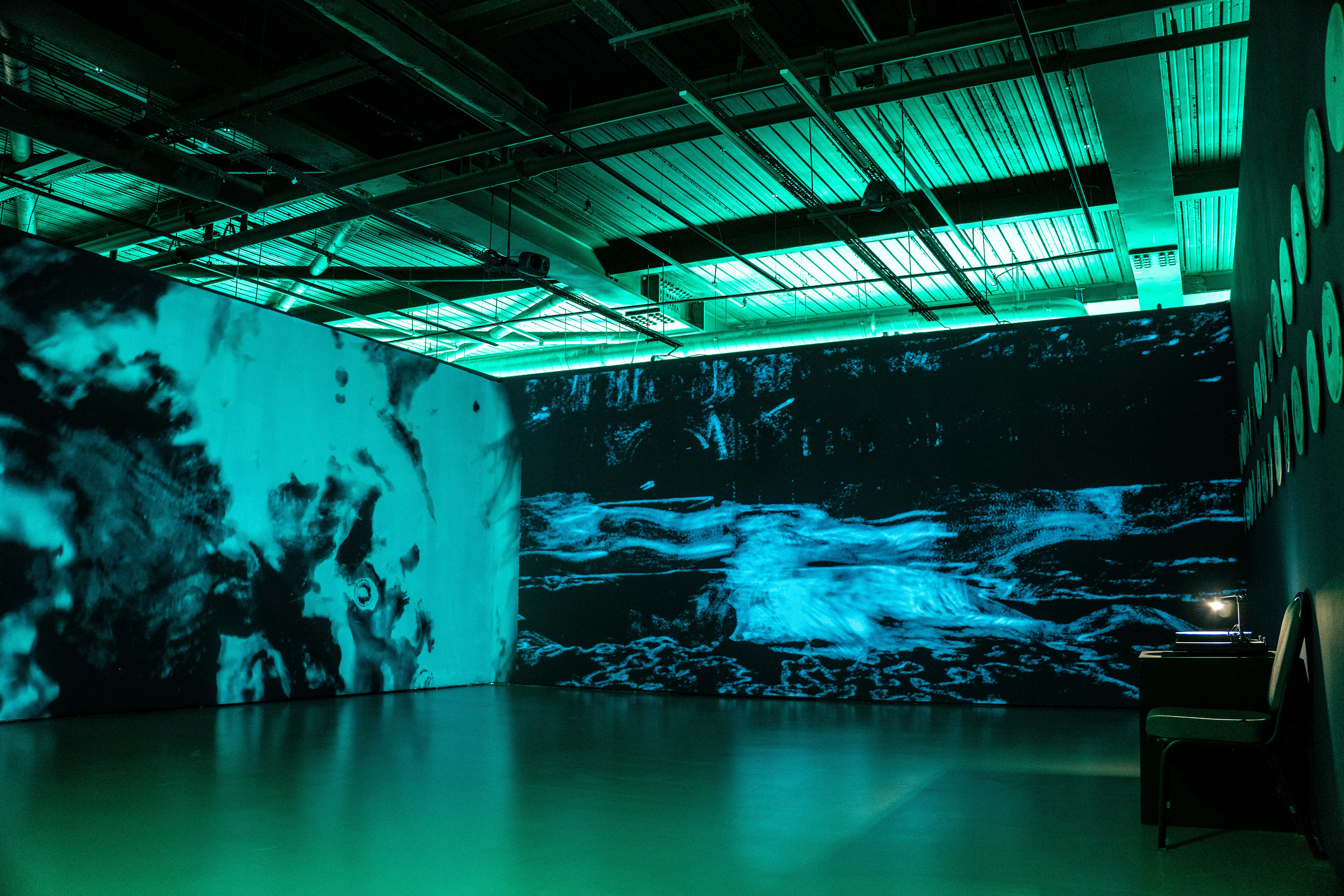
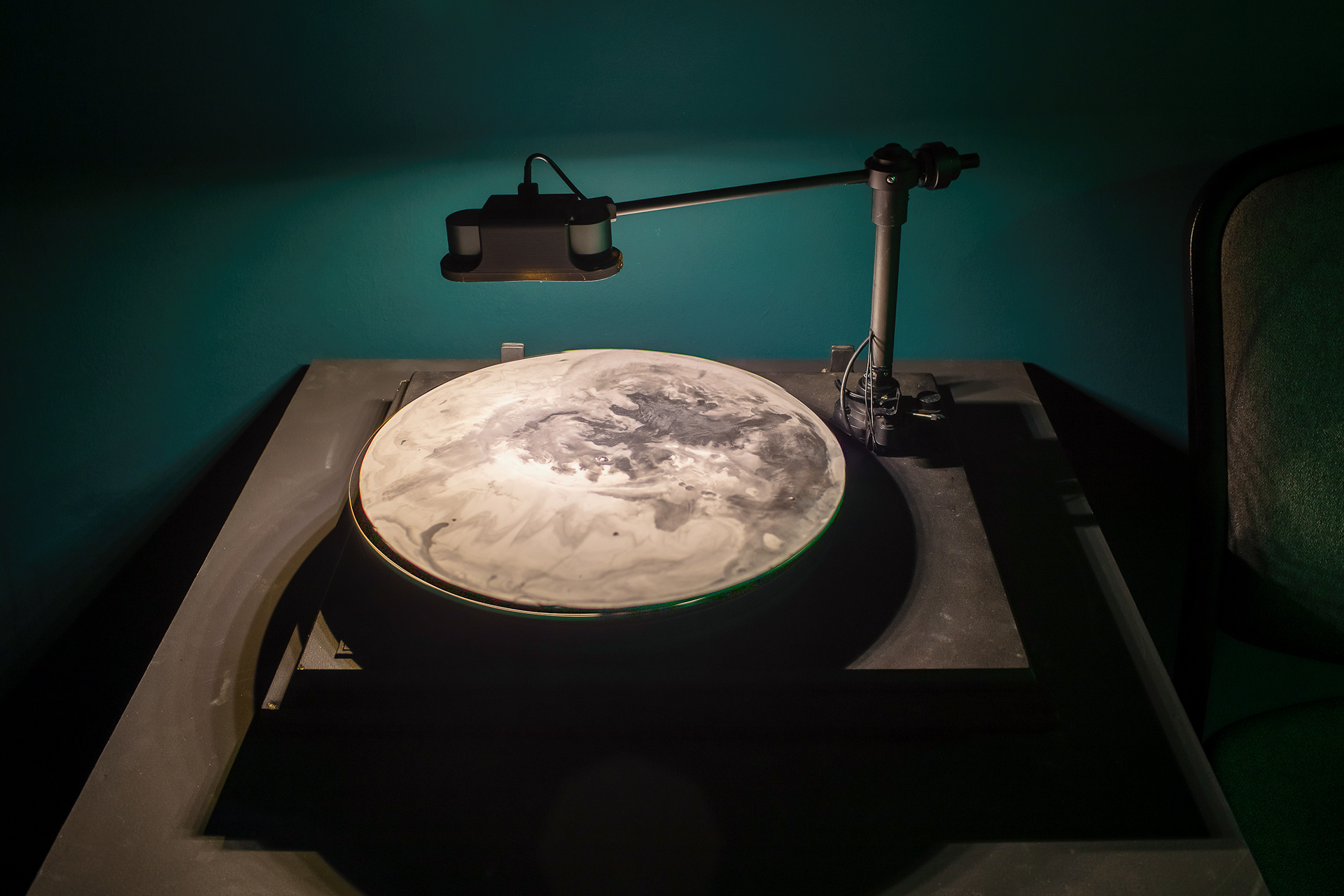
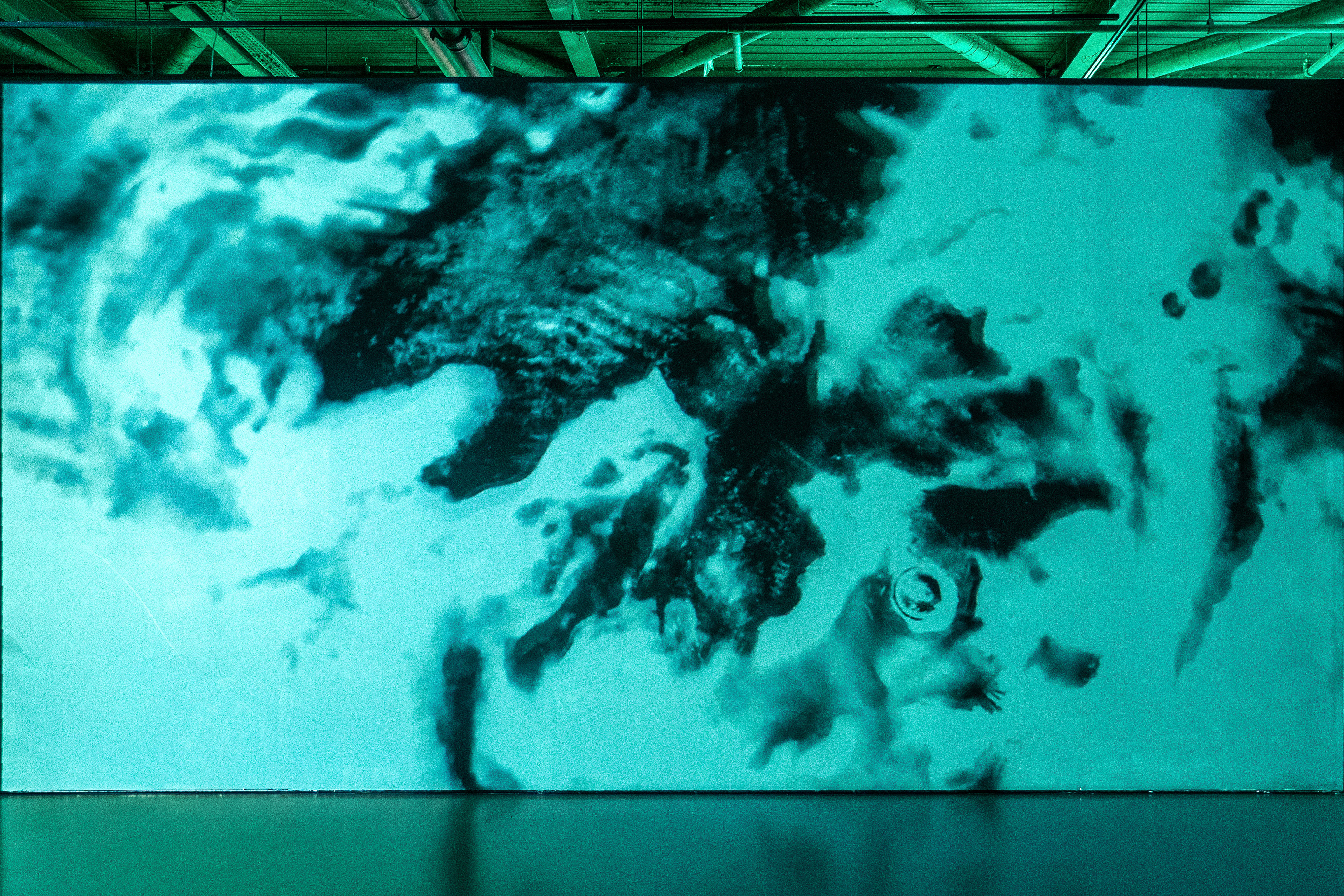
In the exhibition space, a disc spins on a turntable. A camera captures its surface in real time, and the live image is projected as a moving field. The disc is not presented as a static object. Rotation keeps it unfinished—always renewing what can be seen. The camera keeps reading what cannot be held still. The viewer encounters not an image preserved, but a surface continually becoming.
The work employs data sonification to translate surface into sound. A camera sensor reads the ink pattern on the rotating disc, and an algorithm converts the differences into audio by translating video frames into MIDI signals. Each disc produces its own 88-key (piano) structure—not as a prewritten composition, but as a pattern emerging from the disc’s changing visual data. The camera’s field is divided into twelve concentric rings, and the analysis begins at the outer ring, moving slowly toward the centre, as if approaching a memory by degrees.
A custom algorithm analyses the surface texture by converting pixel values into a monochrome array, then translating the greyscale data into MIDI notes. Even when the camera scans the same region repeatedly, the system is designed to preserve a sense of melodic structure rather than collapsing into repetition. The disc’s raw, static materiality is thus turned into an ongoing process of digital composition—an audio-tactile soundscape generated from what otherwise appears inanimate.
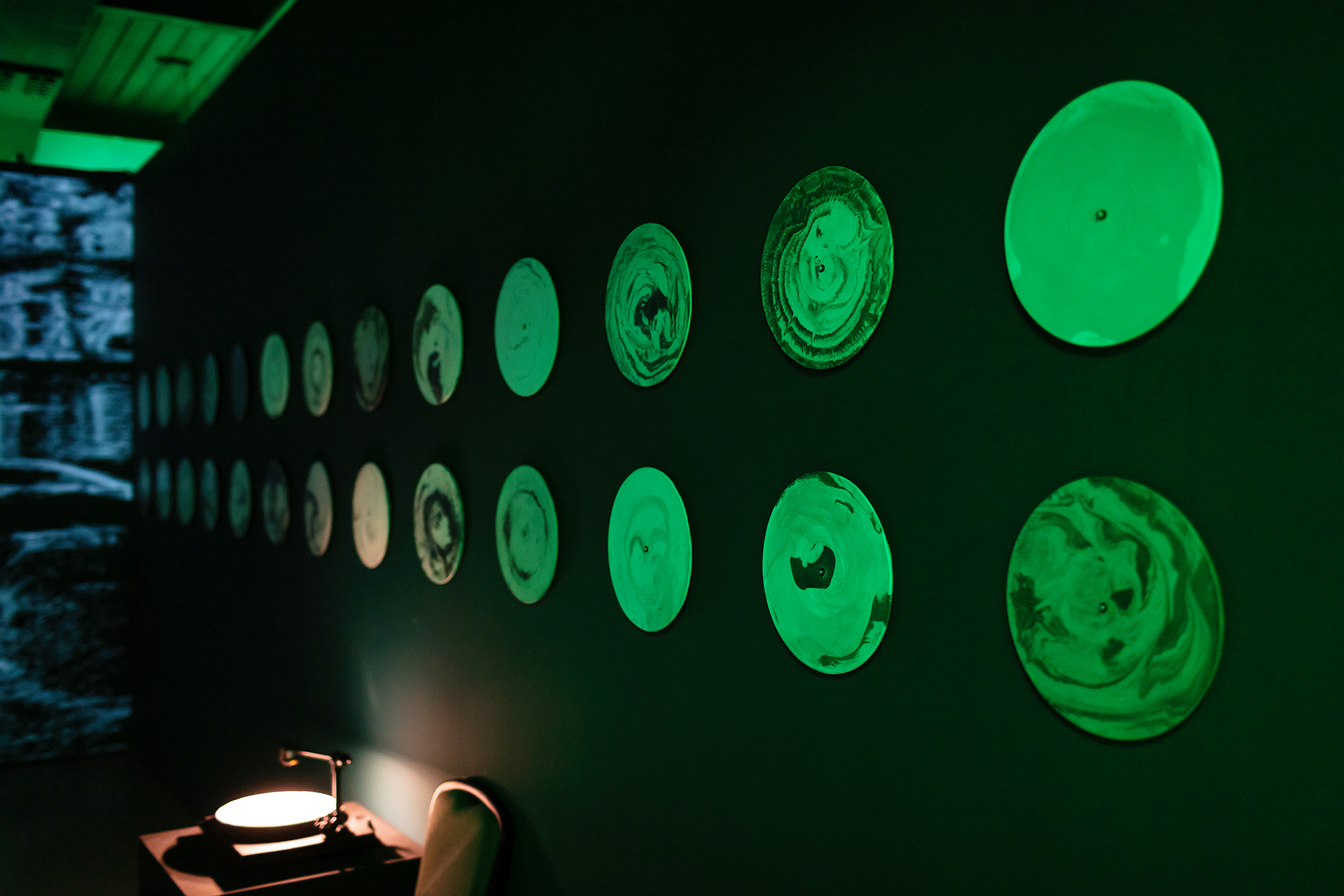
Yet the disc is not a device that stores or plays back sound. It functions instead as the place where sound disappears: a surface on which the conditions for sound remain. The sounds produced here are not archived. They appear briefly with rotation, disperse into the air, and vanish. Disappearance is not loss; it is the work’s mode of existence. Sound is not a finished product but an event, and memory reopens as present sensation only after the event has passed. Memory, in this work, is not something to be held. It is an afterglow that returns through disappearance.
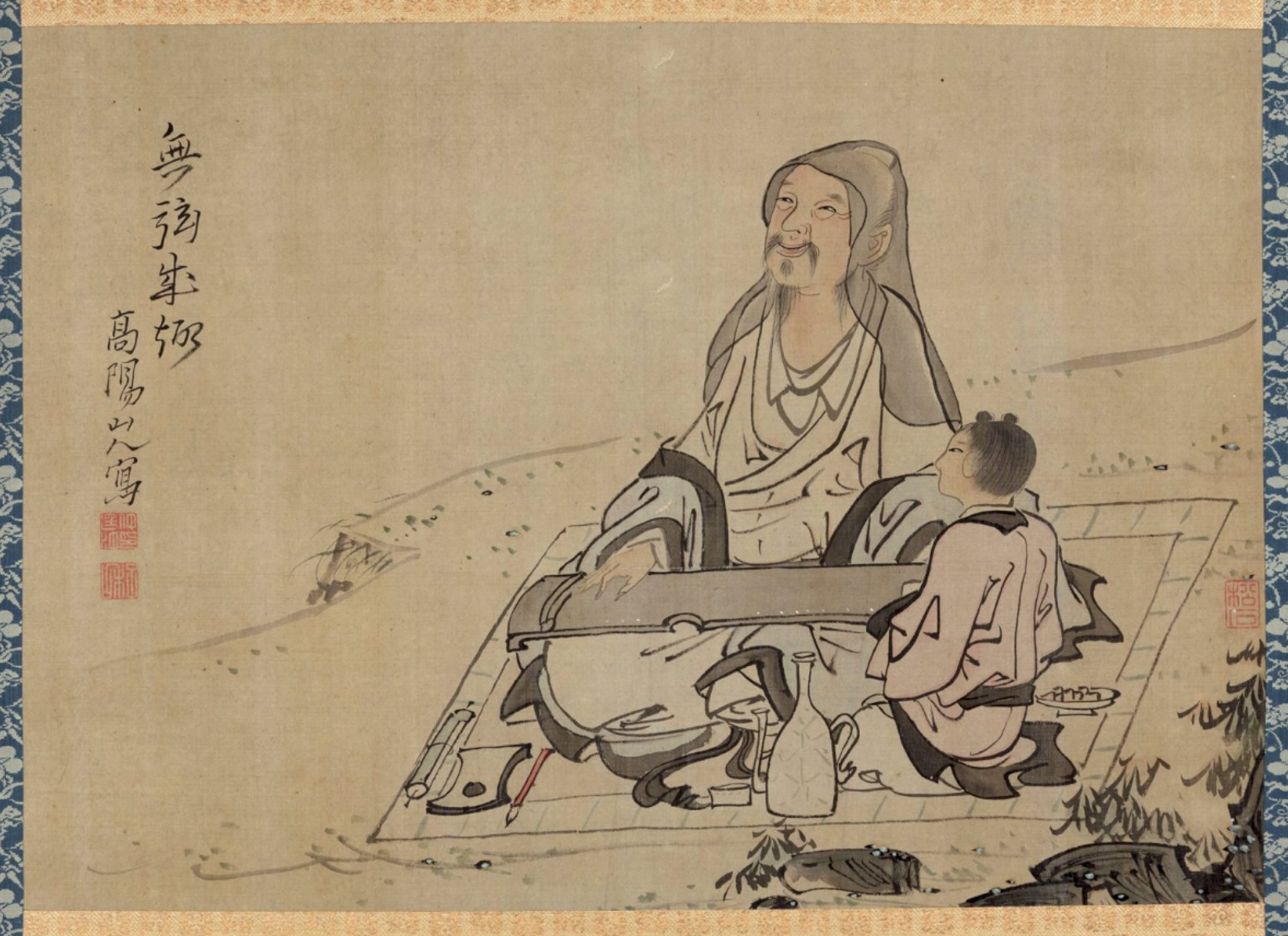
The installation also draws on the geomungo, a Korean zither historically tied not only to music but to quiet cultivation and reflection. In particular, the idea of the stringless geomungo evokes a form that sustains resonance precisely by not sounding. The poet Tao Yuanming (365–427) wrote of keeping a stringless zither nearby and, when wine had softened the moment, touching it to convey what was in the heart. The instrument is not for producing sound, but for letting the mind remain in silence. This work recalls that attitude through contemporary sensing and computation.
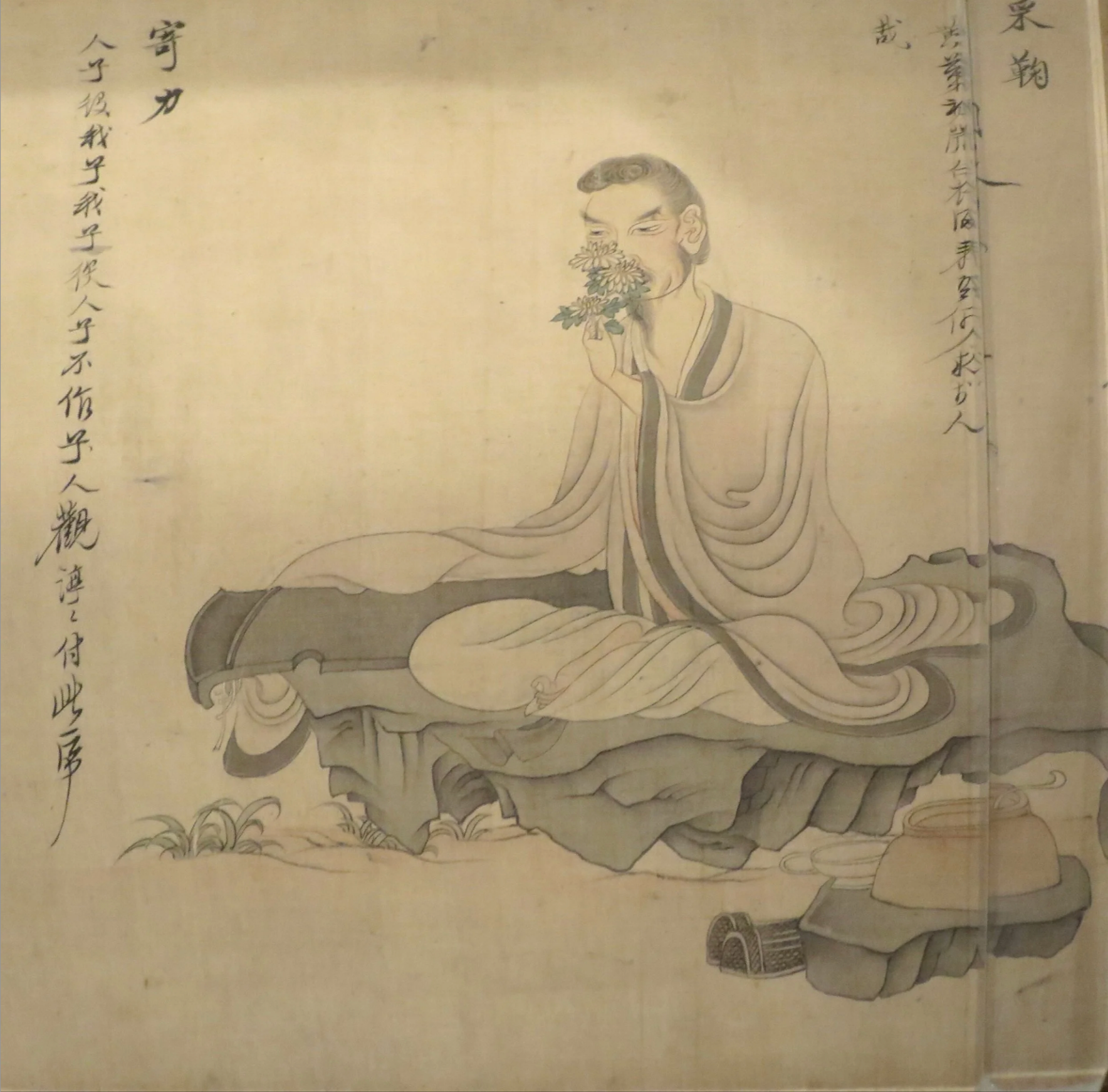
Tao Yuanming
Daejeon, Summer of 2023 begins from a stance taken that summer: faced with an unjust incident, the artist chose silence rather than explanation or argument. This silence is not refusal or escape. It is a step back from the language of defence and dispute—a way of remaining without turning experience into proof. What remains instead are dates, breath, differences in surface, and sounds that appear only to vanish. These traces operate with devices, air, and rotating time, briefly forming and dissolving into shifting sensations. Silence here is not emptiness, but an open space in which perception can move and transform.
The viewer does not receive a complete image or a finished piece of music. They encounter dated discs, live projections of a surface continually renewing itself, and sounds that arise from that surface only to fade into the air. Rather than deciphering a message, the viewer inhabits sensations that form—between material, machine, air, and time—and then disperse. The work asks what remains as memory, what disappears, and how disappearance shapes what can be felt in the present. These questions do not demand answers. They return, at different speeds, within each viewer’s own time.
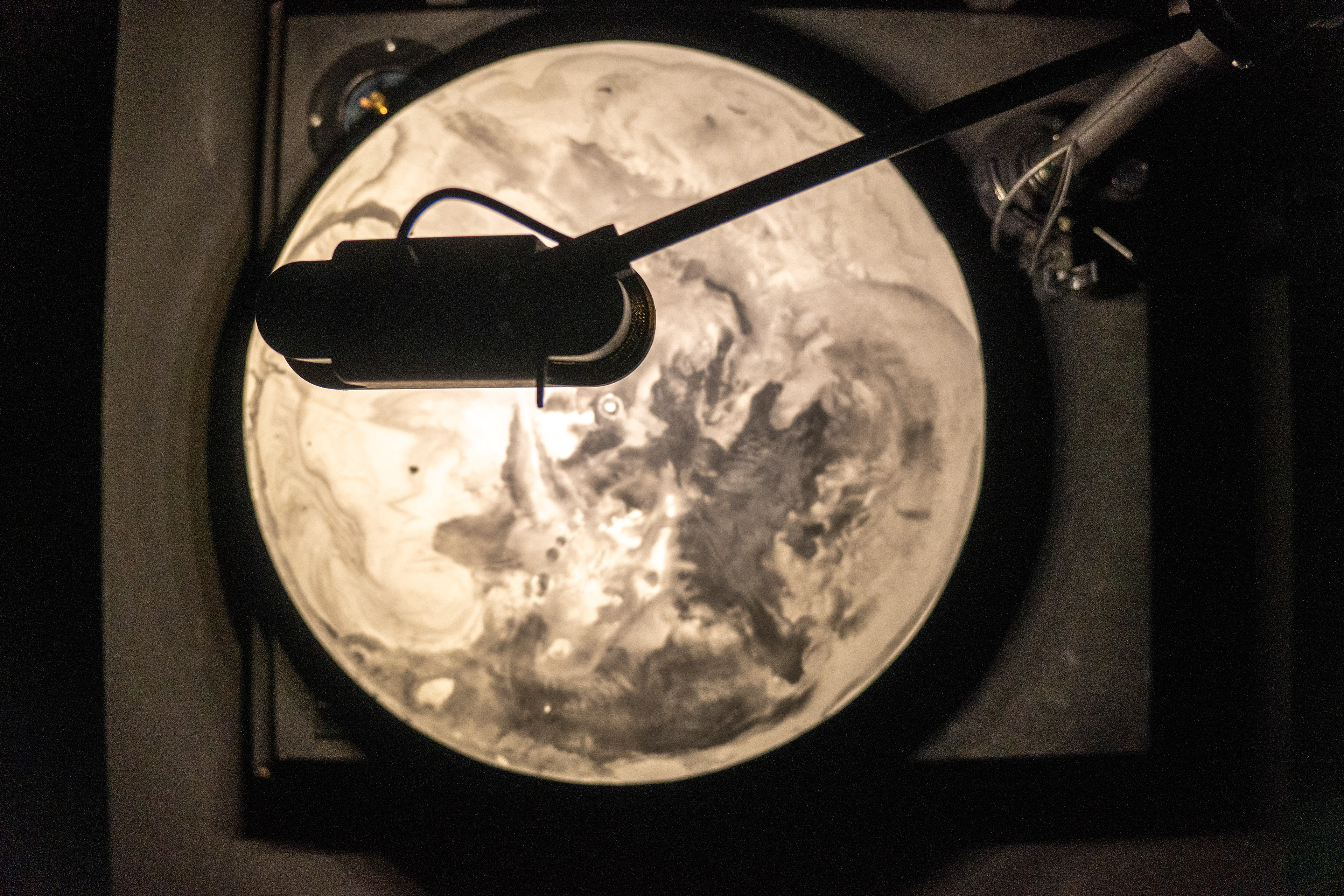
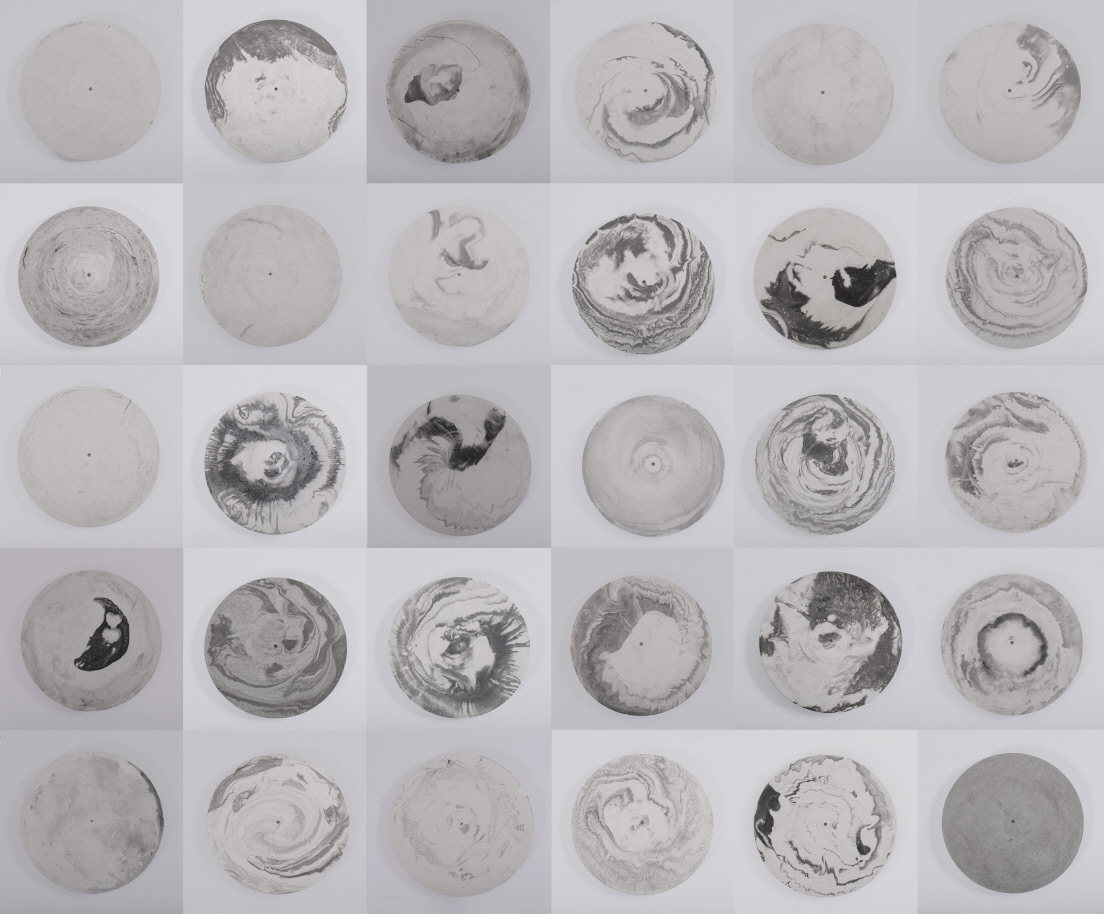
Daejeon, Summer of 2023, 2023.
M10 Plaster and Sumi Ink for Calligraphy Sculpture
Photo by Dan Weill, Courtesy of the KCCUK
& Sungbaek Kim
Dib Bangkok’s exhibition video for Daejeon, Summer of 2023,
exploring memory through sound, movement, and time.